
2 results found
Pests
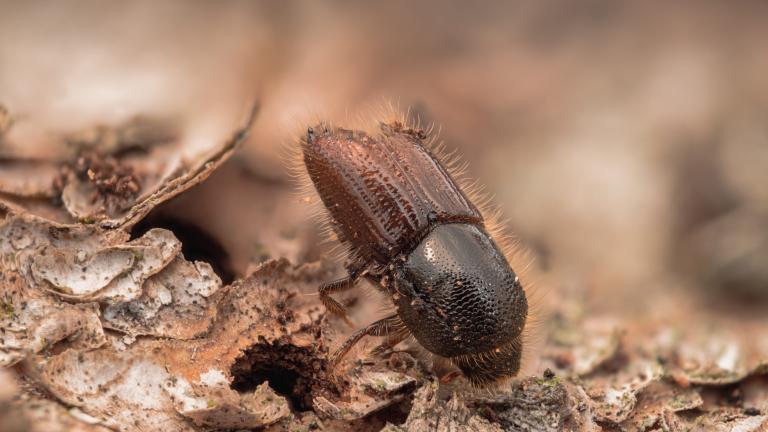
European Spruce Bark Beetle
Ips typographus
OverviewThe European spruce bark beetle is one of the most economically devastating forest pests in Europe, causing unprecedented levels of tree mortality and timber loss across the continent. Adult beetles are small, cylindrical insects measuring 4-5.5 mm in length, with a dark brown to black coloration and a characteristic "scooped out" rear end bordered by distinctive spines. The beetles attack spruce trees by boring through the outer bark and establishing breeding galleries in the phloem layer beneath, where they feed, mate, and lay eggs. These gallery systems disrupt the tree's vascular system, cutting off water and nutrient transport, leading to rapid tree death—often within weeks of initial attack. The pest's primary and most economically significant host is Norway spruce (Picea abies), which forms the backbone of commercial forestry across large areas of Europe. During endemic conditions, beetles primarily colonize weakened, stressed, or windthrown trees. However, during outbreaks…

Pests
Large Pine Weevil
Hylobius abietis
OverviewThe large pine weevil, also known as the pine weevil or black pine beetle, is one of the most economically significant pests in European forestry, causing extensive damage to conifer regeneration. Adult weevils are robust insects measuring 8-14 mm in length, with a characteristic elongated snout (rostrum) and a dark brown to black body marked with irregular patches or bands of yellowish or pale brown scales that create a mottled appearance. The weevils have distinctly elbowed antennae and a hard, sculptured body surface. Adults feed by chewing bark from the stems of young conifer trees, creating distinctive feeding scars that girdle stems and kill or severely damage seedlings and transplants. The pest poses its greatest threat during reforestation operations, particularly in the first 3-5 years after clear-cutting when young trees are most vulnerable. While the large pine weevil attacks various conifer species—including Scots pine, lodgepole pine, and various fir species—it is particularly…