
Hylobius weevil costs – A forester’s viewpoint
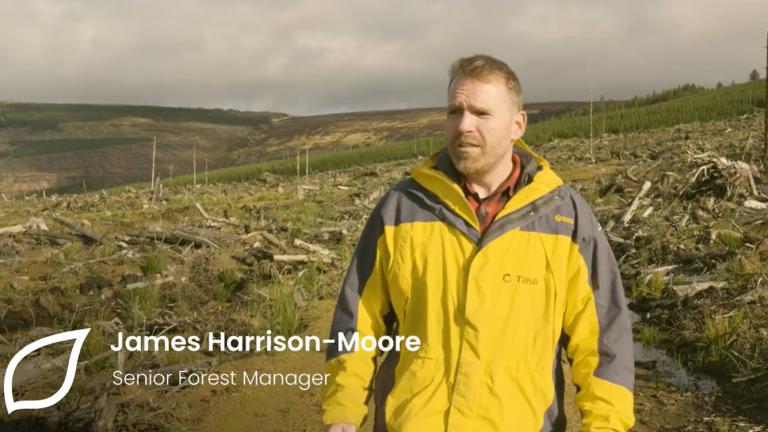
Pine weevil is an absolute menace to forestry, resulting in damage that costs the forest industry millions of pounds a year, according to James Harrison-Moore, Senior Forest Manager in the north of England for Tilhill Forestry.
A forester for the past 12 years, James is passionate about working on the land and appreciates the long-term nature of the forest production. “A forest is a long time in the making. It takes in so many factors of the landscape. It’s like farming, but just over a much longer time-scale,” he enthuses.
Watch James Harrison-Moore's viewpoint on Lanzarta and Hylobius large pine weevil challenges

Playing this video requires a marketing consent.
Click anywhere on the video to renew your consents.
He highlights that even when a forest starts to reach its maturity, it’s only one stage in its cycle, when the whole process to plant and grow trees and wood resources for the future starts all over again.
“One of the most important points in any forest cycle is the harvesting and then the restocking.
“If you don’t get the early establishment right, that leads on to problems in the future.
“It’s crucial in the first three years of planting trees that you try and get them as best you can.”
It’s at this stage that the Hylobius large pine weevil can cause the greatest damage, he warns - costing the UK forest industry an estimated five million pounds a year.
In terms of the weevil life cycle, James points out that the adults can reside in mature forest areas without causing too much concern. “It’s only when we harvest an area that they see a new food source to move in and lay their eggs in the residual stumps.

“That’s where the cycle continues, until either we’ve prevented it by application of insecticides, or the establishing trees get large enough to withstand the damage.”
Adult weevils burrow through the bark of young saplings to reach the cambium layer and extract the sap. Other adults are then attracted to the vulnerable wound area that can quickly lead to the tree being ‘girdled’, with damage right around the stem from which it cannot recover.
The challenge for James and the team is the level of losses in establishing saplings that can be so high as to leave the forest unproductive, with associated costs and time-consuming repeated replanting to fill the gaps.
“The weevils kill trees, hence you’re constantly replacing the losses and it’s costing more and more,”
Tilhill Assistant Forest Manager, Emilia Ramm, reports they have used Lanzarta for the first time on the site. “The goal is to keep the site as free of weevil as possible,” she says.

On sites and areas where Hylobious has a history of economically damaging losses the strategy is to pre-treat trees before they go into the forest, and then spray twice during the season so they have the best protection.
Emillia highlights that for her and the team, the main benefit to Lanzarta is that it is not as toxic for other biodiversity in the forest.
That environmental safety has been a key objective for the development of Lanzarta, outlines Sarah Hughes, Syngenta Forestry Business Manager for UK and Ireland. “It’s targeted only at pine weevil, with a novel mode of action that means it only comes into effect once the weevil ingests the treated bark when chewing on the sapling,” she reports.

Sarah also outlines that working with Confor and the forest industry, Syngenta has undertaken a wealth of research into the activity of Lanzarta, along with developing application techniques that will optimise targeted treatment on the tree and minimise any loss of the product into the wider environment.
“Sharing this experience and knowledge with the wider industry will help them to get the best possible result with Lanzarta and apply it in the most responsible way available – and to protect forests for the future.”
Playing this video requires a marketing consent.
Click anywhere on the video to renew your consents.